Marlo Duchêne
Berlin Swiss-French artist & researcher
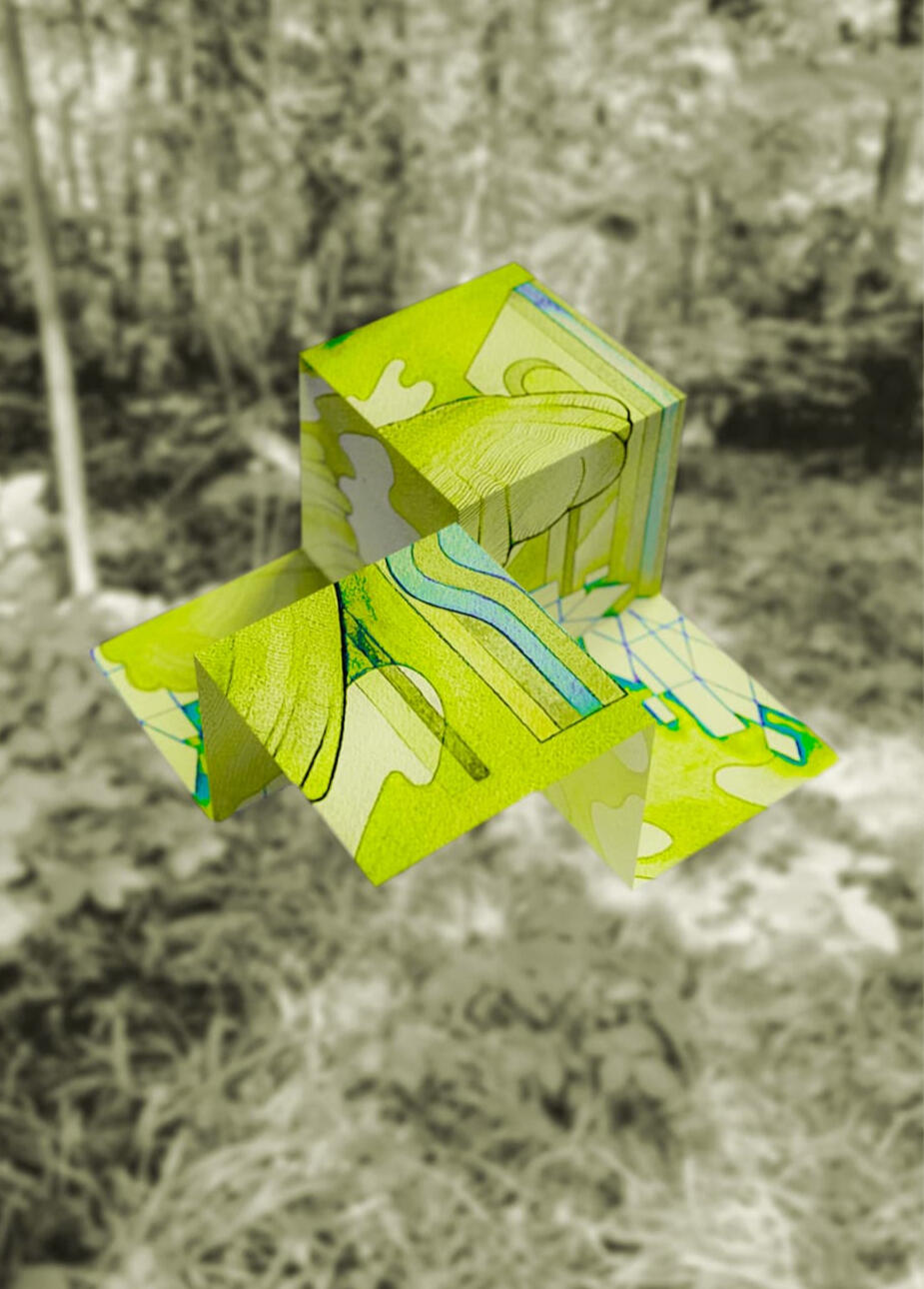
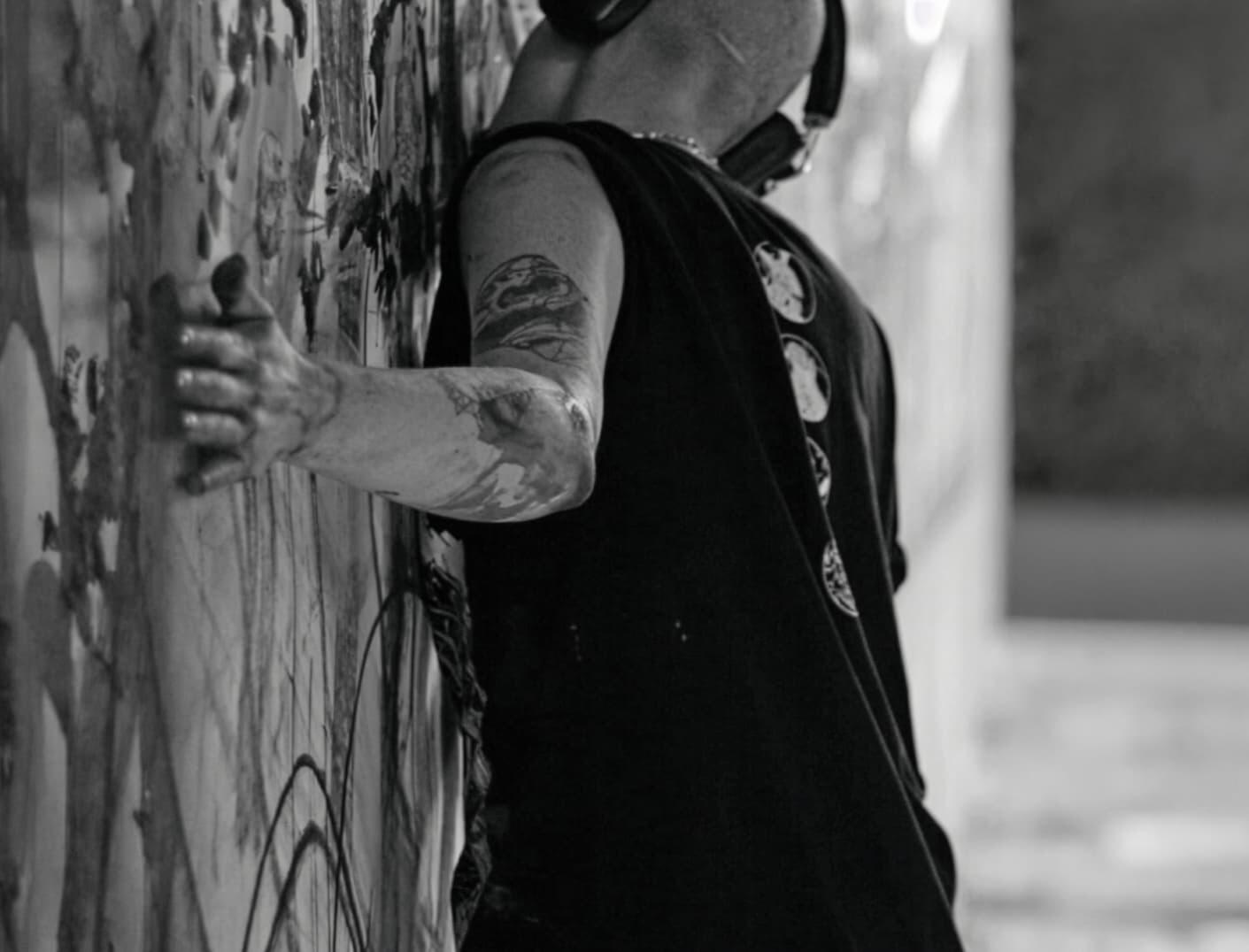

My artworks stage bodies slipping through computational systems.
All works prior to 2026 are published under my former name, Yaron Maïm.
Drawing Practice
self-initiated
Everything begins with drawing. iromatik is a generative system that produces diagrammatic yet personal works through operations such as bending, grafting, and orbiting. Each drawing acts as a node in an infinite digital canvas.
Science Visualisation
for Max Planck Institute for Mathematics in the Sciences
Folding Landscape is a research-based 3D animation developed in dialogue with scientists that engages with the topology of polyominoids, transformation, and connectivity.
3D Motion Design
for Company Christoph Winkler
Commissioned for Songs & Dances about the Weather, this 3D motion project was developed in Houdini for digital theatre, using data from the World Glacier Monitoring Service.
Generative Live Visual
self-initiated duo
Suuperpose (Babin x Duchêne) is a duo working live with analogue modules and generative tools, asking what happens when technology is misused in real time.
Interactive Drawing & Choreography
Self-initiated and commission for Company Christoph Winkler
A Faster-than-Light Sketch gives form to the tension between the human desire to keep forms open and the machine's drive to complete them.
Research Notes
self-initiated
Situated, practice-based research, where artworks and inquiry inform each other. wrong.fit investigates embodied interaction with computational systems through first-person logs, analysis of human–machine encounters, and dialogue between art and science.
Speculative Fiction
self-initiated
Chasing GPU is a speculative fiction on body and technology. In 2033, Chase and Ray move through systems that sort bodies into legible or illegible.
Teaching
self-initiated
Tiny Storms Lab teaches how to turn experimentation into integrated knowledge through generative video sketching and contra-prompting, addressing the gap between rapid production and critical understanding.
Clients, Institutions, & Communities
Alongside my artistic practice, I collaborate with clients, communities and institutions, working across artistic direction, 3D motion design, live generative visuals, science visualisation, creative technology, and teaching.




If you have a project or collaboration in mind, please get in touch:hello [at] mrlo [dot] studio
Photo credits: Miriam Woodburn, Nuno Roque, Elsa Triquet Rey, Loïc Iten, Aïsha Mia Lethen Bird, Mayra Wallraff.
Marlo Duchêne
Theatre, dance, performance, science communication, and institutional commissions.Berlin & remote.
What I deliver
3D motion design · Live generative visuals · Video design for stage · Artistic direction · Teaching
How I build it
Houdini · TouchDesigner · After Effect · Real-time AI
Drawing machines · XR · Interactive installation · Traditional painting
Recent work
Digital theatre: Company Christoph Winkler
Research visualisation: Max Planck Institute, TU Berlin
Teaching: HFF Munich, School of Machines
Contact
hello [at] mrlo [dot] studio
Art & Science
Collaboration & Teaching
2025
University of Television and Film Munich
Max Planck Institute for Mathematics in the Sciences Leipzig.
2024
Center for Scalable Data Analytics and Artificial Intelligence (ScaDS AI), Computer Science, Universität Leipzig.
2023
Company Christoph Winkler, Berlin.
Art Doc Archive, Technische Universität (TU), Berlin.
Exhibition, Screening, & Live Performance
2025
Berlin New Media Week, Mahalla.
Bridges Organization, Art and Math, Eindhoven, Netherlands.
Seek Find, Soho House Berlin.
2024
School of Machines, Making & Make Believe, Berlin.
2023
Video Club, Same Heads, Berlin.
Living Gallery, New York.
2022
Air Berlin Alexanderplatz in partnership with the Swiss Embassy.
Artist Statement
Something happens just before a form becomes recognizable. That moment is where I work.My artworks stage bodies slipping through computational systems.I start from simple rules around motion and materiality and push them through computation, drawing machines, real-time animation, speculative fiction, and my own body.I do not illustrate data or narrative. I turn them into something that can be felt.This is why I work with scientists and choreographers: the most interesting things live at the edge of what a system can describe, between disciplines and definitions. I am drawn to what gets left out when the world is forced into a model.That attention is shaped by trans experience. I know what it is to live in the space before a category defines.
About
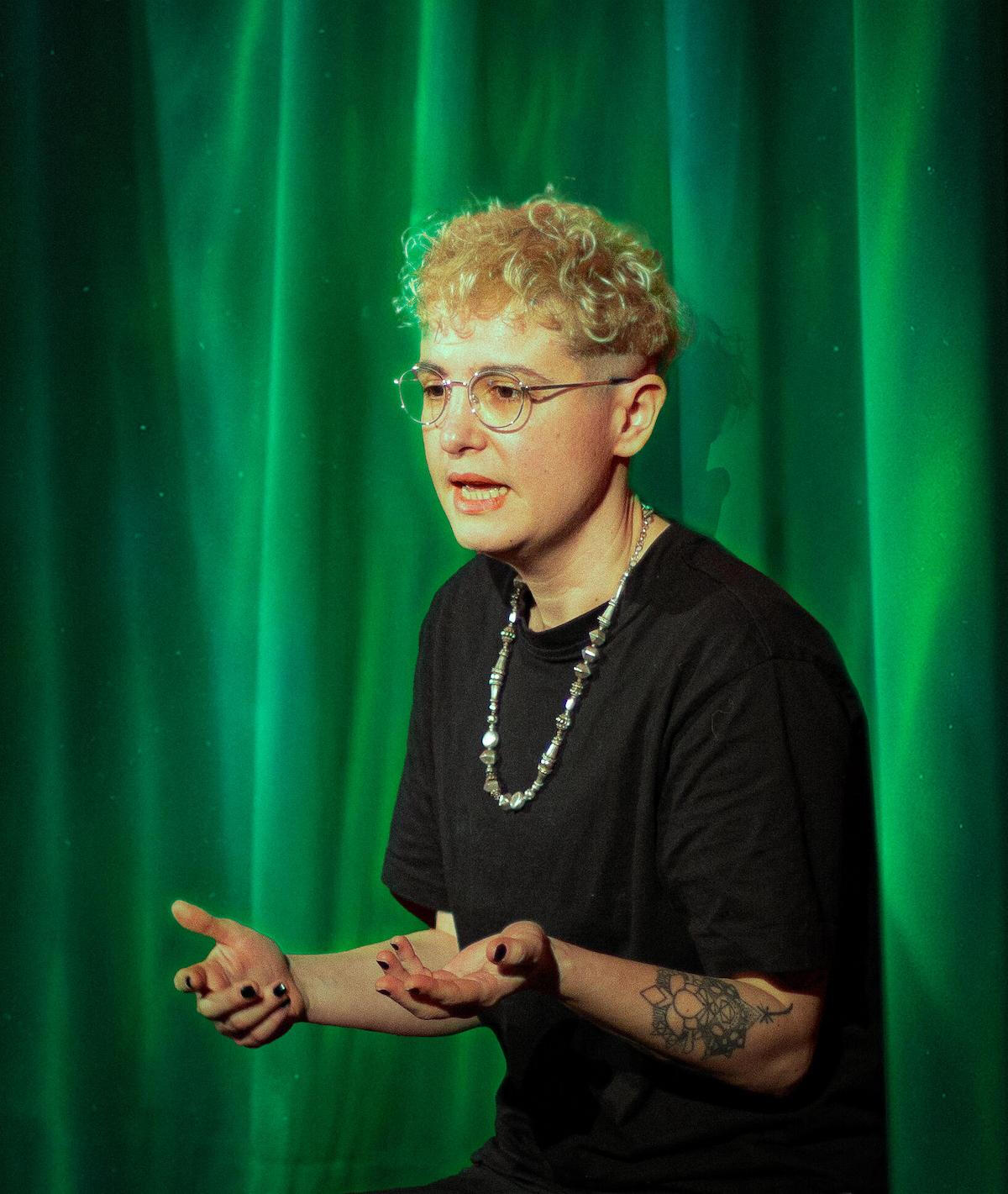
Marlo Duchêne is a Swiss-French artist and researcher based in Berlin.They make artworks that stage bodies slipping through computational systems, using drawing, painting, video, writing, web-based media, 3D, and performance.Trained in VFX/3D animation, with dual Master’s degrees in Solo/Dance/Authorship (HZT Berlin) and Critical Curatorial Cybermedia (HEAD Geneva), they collaborate with choreographers and researchers, from independent spaces to the Max Planck Institute for Mathematics in the Sciences.They teach creative methodologies to scientists and technical workflows to artists.
Contact
hello [at] mrlo [dot] studio
Chasing GPU is a speculative fiction on body and technology. In 2033, Chase (trans) and Ray (AI) navigate medical and bureaucratic systems that sort bodies into legible or illegible. Three voices, including the author, shift between narrative and analysis. Across text, 3D, drawing, photography, and animation, it constructs a split, co-authored form that breaks these logics, treating transition as ungovernable.
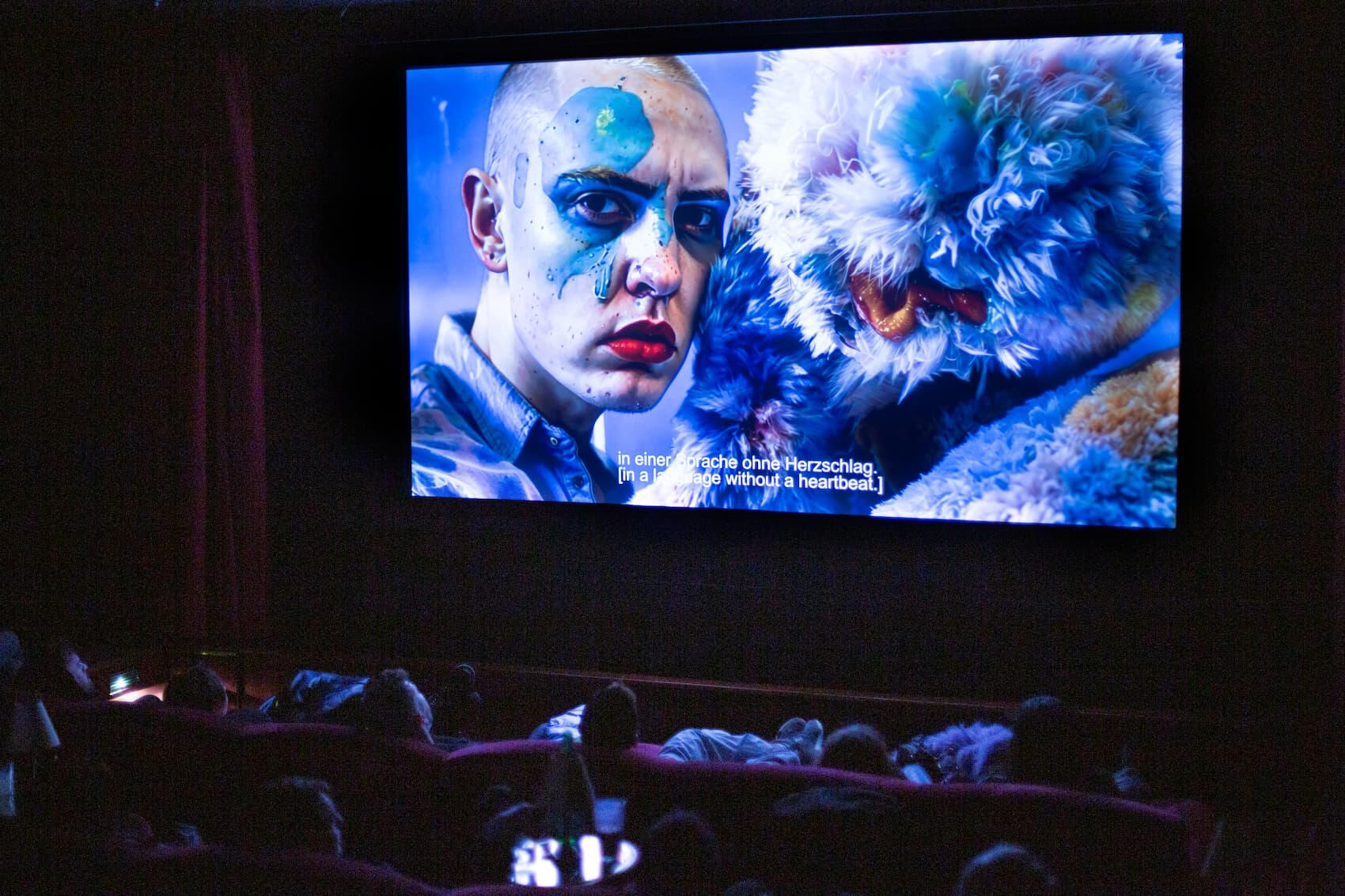
Chasing GPU builds on my earlier practice, which I describe as administraffective fictions, a concept I developed during my MA in the CCC program (HEAD Geneva). Across drawing, text, craft, print, web-based media, video, performance, I explored how bodies move through infrastructural systems. It includes Jade Ministre des Territoires Invisibles (2014), a 120-page experimental graphic novel published anonymously in 49 hand-made copies. The work follows a character navigating precarity and shifting positions of authority. It destabilizes power: in the archive, the imposing doctor is Jade themself.
iromatik
Everything begins with drawing. iromatik is a generative system that produces diagrammatic yet personal works through operations such as bending, grafting, and orbiting. Each drawing acts as a node in an infinite digital canvas.iromatik is an open system, accumulating fields of work and developing its own systems of classification. Fields are vectors rather than fixed labels. The drawings move across mapping, hybrid, animation, and volumetric conditions.It has multiple points of departure:An intuitive insight from painting practice and trans lived experience. It comes from noticing a parallel between visual abstraction and gender transition: both operate by refusing stable representation.A sustained 3D practice of scanning found objects, modelling, and animating in node-based software. In one instance, iris petals, fragile, almost dissolving, (hence the project title) were processed through a pocket device. Same size as a watercolor box. This encounter between granulation and sampling formed an iromatik node.Research from Solo/Dance/Authorship (Master thesis, HZT Berlin, 2018), Material for Solometrics, defining three temporal modalities of drawing: living (the body as a drawing instrument in real time), dead (drawing as a fixed record), and living-dead (generative processes between authored and autonomous states). Using a projection of rules driven by a DIY motion-tracking device, it investigates how durational drawing bends procedural systems and material performance at the point where recognition begins to break down.